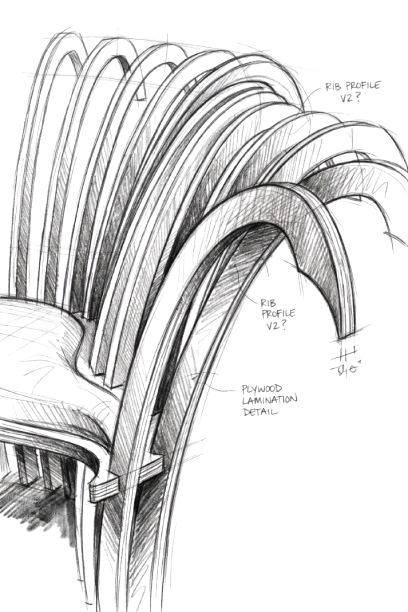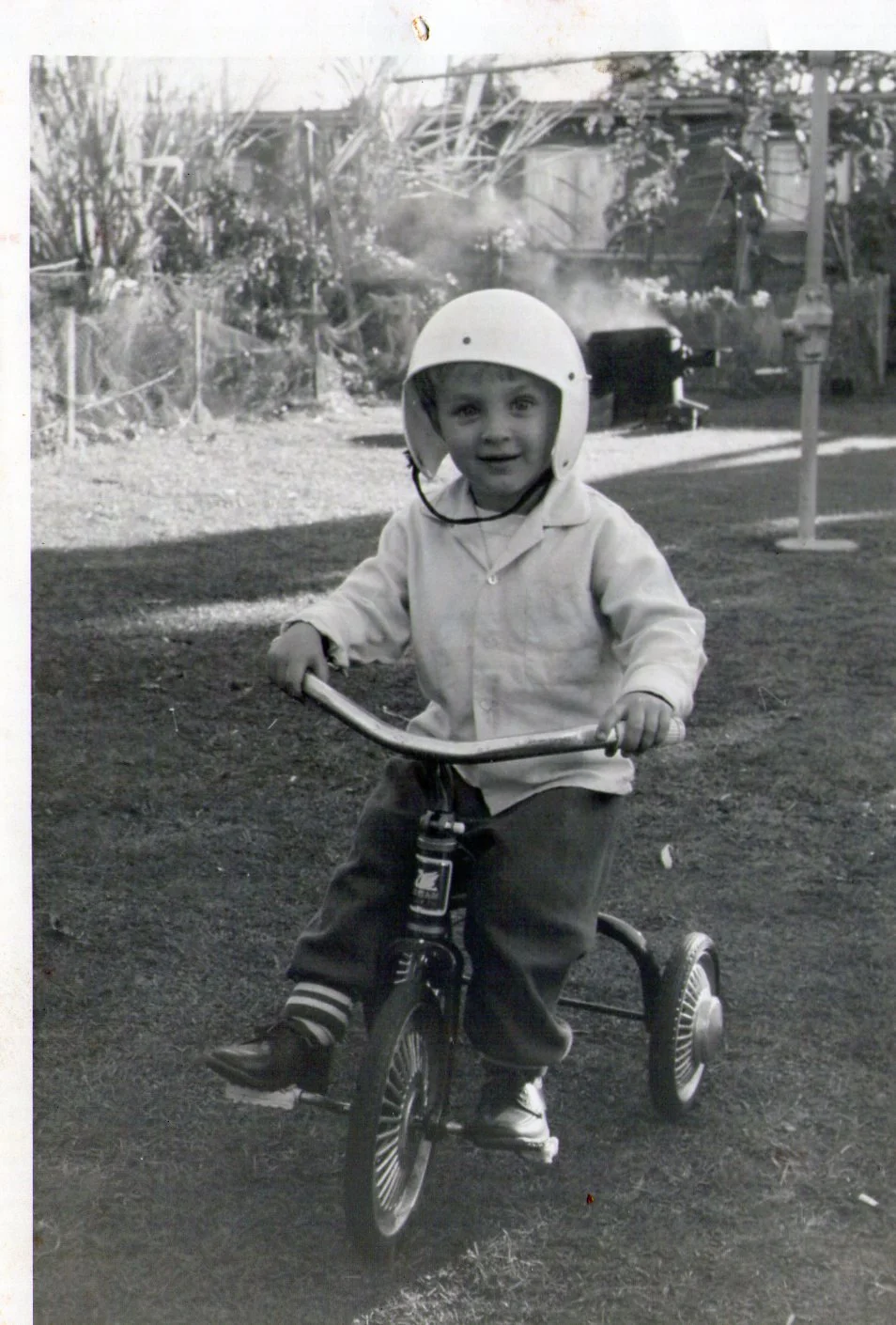
A Redcliffe Boy…
There was a boy in Redcliffe who could not leave things alone. Not in the way of restlessness or ruin, but in the way of someone who looks at a thing, a fence paling, a discarded length of timber, the grain running through a plank of pine and sees something waiting inside it, patient and unclaimed.
Born in 1974, raised in the Queensland sunshine that falls warm and languid over the rocky shoreline, Will grew up with that same familiar glow of light in him. When woodworking came to him at school, it did not feel like a subject. Instead, it felt like a recognition, as though the timber and the boy had been looking for each other. He went on to complete his apprenticeship and then, in the way of young men who understand that mastery requires more than one teacher, he left to travel the world.
He watched other craftsmen work in other countries, learning the language of the wood as it was spoken elsewhere. Different species, different joints, different silences between the maker and the material.
When he came home to Brisbane, he studied under Robert Dunlop, a master craftsman of the old tradition and something in him settled and deepened. The journeyman became a craftsman.
In time, this became something harder to name. It becomes the art of making. Not a livelihood so much as a way of conversing with the world. Will saw wood not as a raw material but a living record and the maker's task is not to impose a form but to find the natural one present in the grain. He felt this kinship before he had the language for it, in a childhood that was nothing more and nothing less than a boy and his hands with all the time in the world to discover what they loved.
The Art of the Study
There is a particular kind of knowledge that cannot be taught in a classroom, but is felt intuitively in the way the hands learn to read a surface before the mind has formed a question, in the way the eye begins to understand light and shadow not as aesthetics but as a feeling.
Will Marx spent years acquiring this knowledge in the only way it can be acquired: thoughtfully in the study of wood.
An apprenticeship teaches you the grammar of the craft. Travel teaches you its dialects. But the deeper education? The one that shapes not just what you make but how you think about making comes from the accumulated hours of being alone with the material, learning its moods and its memory.
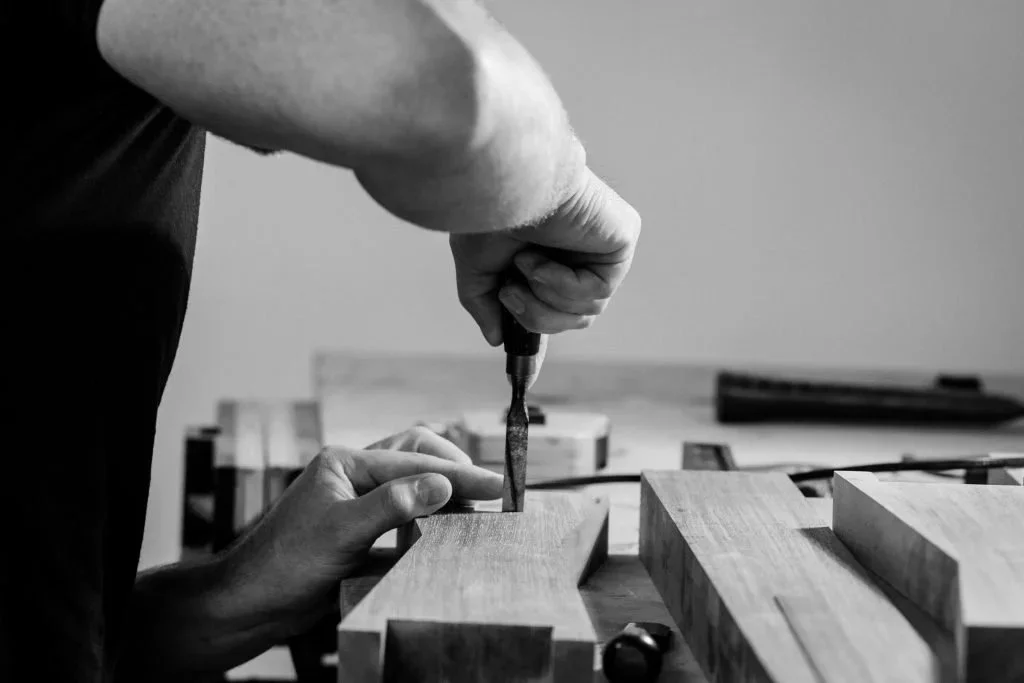
Timber is not inert. It moves with humidity, contracts with cold, holds within its rings a record of every drought and every wet season it survived before it was felled. A craftsman who does not understand this will force their will upon the wood. A craftsman who does, will work with it the way a good conversation works with attentiveness, understanding, with give, with a willingness to be surprised by what the other party has to say.
For over 25 years, Will learned to have that conversation. He learned it in workshops and in sheds, in the particular silence that falls when a hand plane finds its angle and the shaving comes away in one long unbroken curl. He learned that patience is not passive. Rather, it is the most active practice a craftsman does. The ongoing decision to stay present to the work rather than rushing towards the finished object.
And he learned, perhaps most importantly, that the finished object is never really finished. It goes out into the world and continues. It is sat in, set with plates, worn smooth by the hands of children. It becomes part of the life of its household in a way that no other object quite does. And somewhere in that understanding, a furniture maker becomes something else entirely. An ode to nature and time.
A Space for Belonging
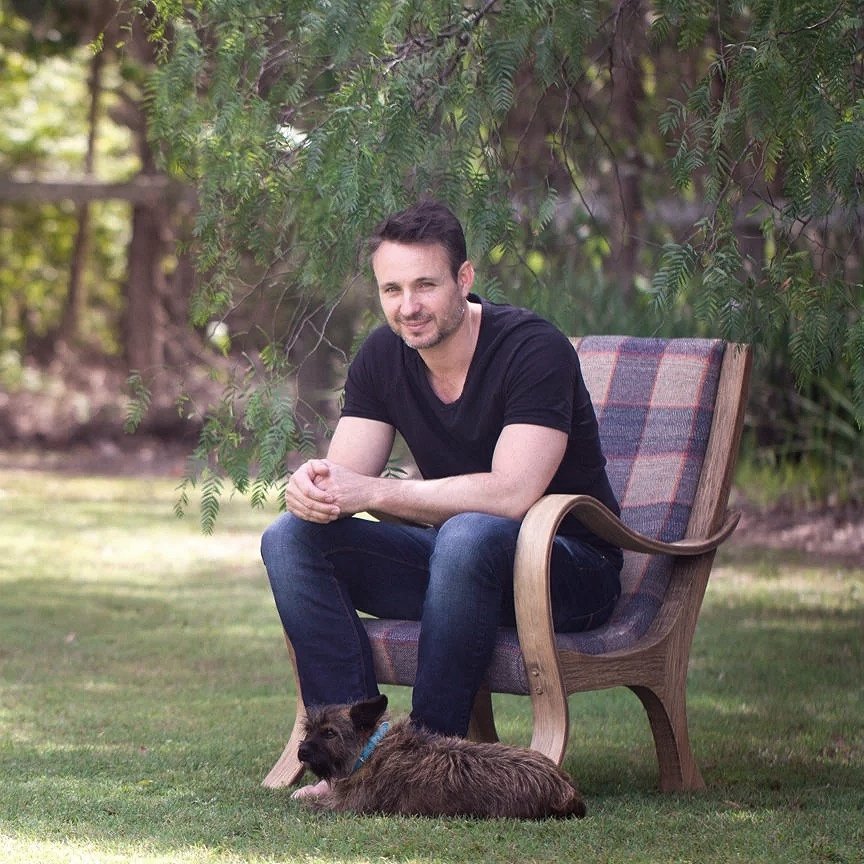
Not every craftsman is trusted with the privilege of creating for extraordinary spaces. Whether it was a heritage home, a flagship store in the metropolis or a superyacht at sea, each required the humility and willingness to surrender the self entirely to the integrity of the design and leave no fingerprints of ego behind. What united all of these spaces was not their scale or their complexity or the names of the vessels and the clients, though the names were distinguished and the spaces were extraordinary. What united them was the same quality Will had brought to every piece since that first recognition in a Queensland schoolroom: attentiveness. The same boy who could not leave things alone, now trusted with things that deserved to be attended to completely.
There is a moment in the making of every piece that Will describes with the particular quietness of someone who has lived it ten thousand times and has not grown tired of it. It comes an hour or two into the work, sometimes longer, when he steps back from the bench and looks at what his hands have created. Not the finished thing for the finished thing is still weeks or months away. But the thing as it is BECOMING. The joint fitting cleanly. The grain resolving into something unexpected and right. The surface holding the light in a way that was not planned but is, unmistakably, correct. It is a moment of happiness so specific and so earned that it resists the larger vocabulary we usually reach for. It is not triumph. It is closer to gratitude.
The work is also, he will tell you with equal candour, an exercise in the management of fragility. Woodworking is not for the fainthearted. Not because it is physically brutal, though it demands of the body, but because a single inattentive moment can undo months of painstaking labour. A cut made a fraction of a millimetre wide of the line. A plane held at the wrong angle for the length of one stroke. The craft keeps no sentimental account of what came before. It asks only what you are doing right now, in this moment, with this tool, on this surface. And so the furniture maker learns, over years and decades, a form of presence that most of us spend our lives unsuccessfully pursuing.
This ability to be exactly here, exactly now, with nothing held back and nothing rushing ahead. What Will makes in that state of presence is not simply furniture. It is, in the most literal sense, time made solid. The rings inside the timber record decades of rainfall and drought before it was ever felled. The craftsman's hours accumulate invisibly inside the object. And then it goes out into a home, a vessel, a private space of someone's life, and it begins to gather the time of its new household. The meals eaten at it, the conversations never to be repeated around it, the children who grew up beside it, the particular quality of light that falls across it on winter mornings in a room that will one day belong to someone not yet born.
This is what the timber remembers.
This is what Will felt before he had the language for it and has spent his life making true. The task of the craftsman is not to manufacture objects but to create the conditions for a life to happen around something beautiful and enduring. George Nakashima wrote that a tree's second life, in the hands of a craftsman, could be its finest. Will has spent more than two decades making the case that this is not metaphor, or method but a devotional practice with a reverence for nature. Call it a sentiment or even a discipline, but at its core, it is a moving meditation to hear what the wood already knows. In Will’s hands, it is offered forward into time, to people the maker will never meet, in rooms he will never see, in a future that belongs, with great hope and great tenderness, to a humanity deserving of its legacy.
Let’s Talk
Interested in commissioning a custom made furniture for your home or space? Fill out the contact form and we will be in touch shortly. Alternatively, explore the FAQ page to find answers to some of the more common questions. We look forward to hearing from you!